
.png)
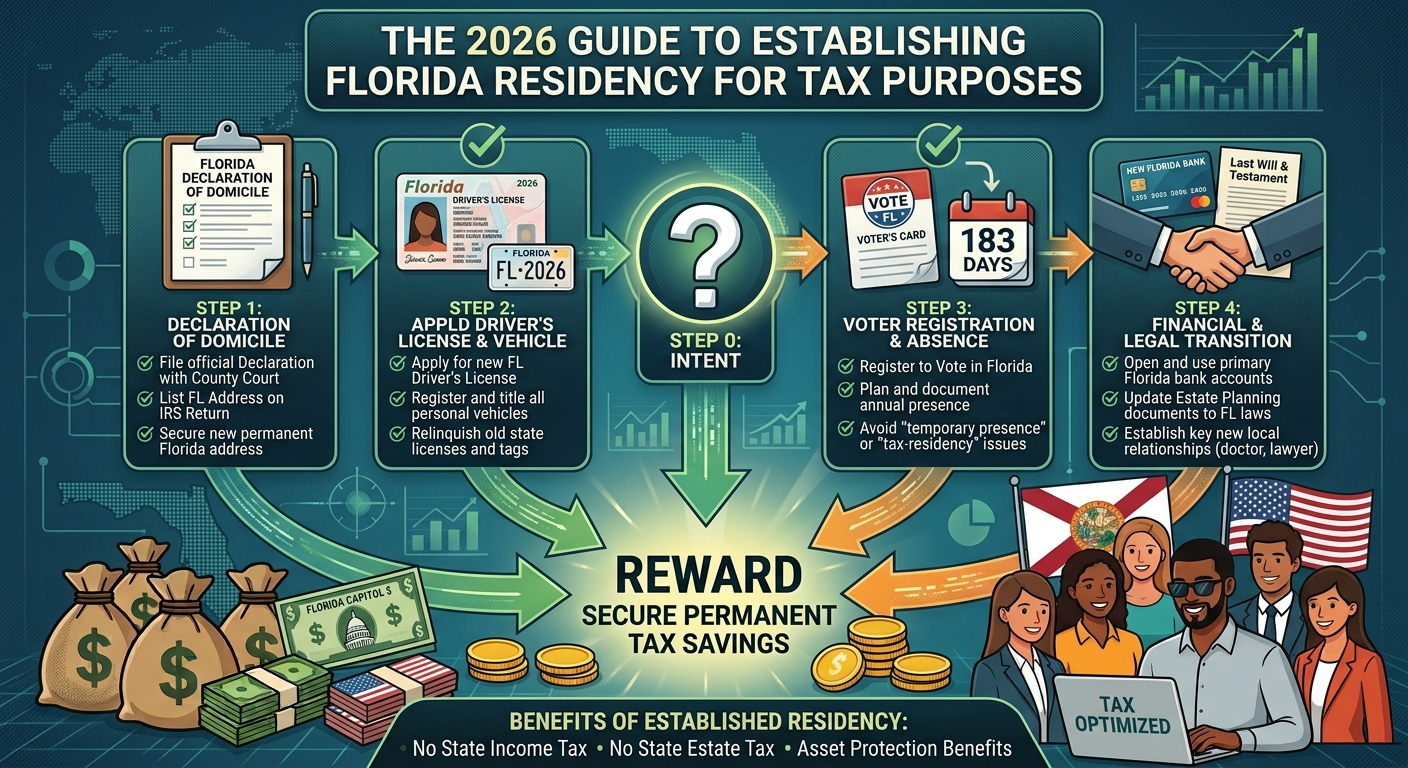
The appeal is simple: Florida has no state income tax and no state estate tax. But here is the catch most people miss: changing your mailing address is not enough. To stop paying tax to your old state, you have to change your domicile and be ready to prove it if that state audits you.
High-tax states like New York, New Jersey, and California do not give up residents easily, and residency audits are common. This guide explains what Florida residency really requires, the difference between domicile and the 183-day rule, and the steps that make your move hold up.
Florida is one of a handful of states with no personal income tax. It also has no state estate or inheritance tax. For someone moving from a high-tax state, becoming a true Florida resident can meaningfully change what they owe each year and at the estate level. That is why so many people relocating to Miami and South Florida ask about it.
These two terms get used interchangeably, but they are not the same, and the difference is the whole ballgame.
Many states use a 183-day test: spend more than 183 days there and you may be taxed as a resident, even if you claim Florida as home. So establishing Florida domicile and limiting time in your former state usually go hand in hand. Keeping a calendar or log of where you spend your days is one of the most important things you can do.
No single action makes you a Floridian. Auditors look at the full picture, so the goal is to move as many ties to Florida as you reasonably can.
File with your Florida county clerk.
Get a Florida driver's license and surrender your old one.
Register to vote in Florida and use Florida as your voting state.
Title and register your vehicles in Florida.
Own or lease your main residence in Florida.
Make Florida your primary day-count home and keep a log of the days you spend there.
Levine CPA and Advisors helps new residents establish Florida domicile the right way and plan the tax side of the move. Call (305) 912-0085 or schedule a consultation.
States with high income taxes are known for aggressively auditing residents who claim to have left, especially higher earners. They may look at where you spend your days, where your family and home are, where your business is run from, and dozens of other clues. The people who come through these audits cleanly are the ones who made a genuine, well-documented move and kept records. This is exactly where planning ahead with a CPA pays off.
If you own a business, run it in a way that supports your Florida domicile, and coordinate your entity and personal moves together. If you have income or accounts abroad, Florida residency does not change your federal or international filing obligations. Our international tax team in Miami and our individual tax preparation services help clients handle both sides. For international families, our Sunny Isles international tax services are a common starting point.
Many states use a 183-day rule, meaning if you spend more than 183 days there they may tax you as a resident. To establish Florida as home, the general goal is to spend the majority of your time here and keep a log, while also formally changing your domicile.
It is a sworn statement, allowed under Florida Statute 222.17, that you file with your county clerk declaring Florida as your permanent home. It is not the only thing that matters, but it is a clear, dated piece of evidence of your intent.
No. A mailing address alone will not hold up. States look at the full picture, including where you spend your days, your driver's license, voter registration, home, and other ties, so you need to genuinely move your life to Florida.
It is possible, especially in high-tax states and for higher earners. Residency audits examine where you actually live and work. The best protection is a real, well-documented move, which is where planning with a CPA helps.
No. Florida residency can eliminate state income tax, but federal income tax still applies, as do any international filing requirements. Florida residency changes the state side of the equation, not the federal one.
This article is general information, not tax or legal advice. Residency and domicile rules vary by state and change over time. Consult a qualified CPA and, where needed, an attorney before relying on any strategy.
Levine CPA and Advisors serves new and existing residents across Miami and South Florida. Call (305) 912-0085 or contact us to plan the tax side of your relocation.